Trip Overview
Embark on a specialist birding journey through Bhutan, exploring diverse habitats from Himalayan forests and alpine valleys to subtropical and lowland forests. Travel from western Bhutan to the rich birding regions of central and eastern Bhutan. Search for rare and specialist species including hornbills, trogons, parrotbills, laughingthrushes, tragopans and Beautiful Nuthatch. The journey also includes Tiger’s Nest and a traditional Bhutanese farewell experience.
Highlights
- Specialist Birding Across Bhutan: Explore diverse habitats from Himalayan forests and alpine valleys to subtropical and lowland forests.
- Rare & Specialist Birds: Search for Beautiful Nuthatch, hornbills, trogons, parrotbills, laughingthrushes and tragopans.
- Yongkola Birding: Full-day exploration of rich eastern Himalayan forests, with Beautiful Nuthatch and Rufous-necked Hornbill among the key targets.
- Kharungla Tragopan Search: A dedicated full day searching for Satyr, Blyth’s and Timmick’s Tragopans and other Himalayan specialties.
- Tiger’s Nest Finale: Conclude the expedition with the iconic Tiger’s Nest hike and a traditional Bhutanese farewell dinner.
Trip at a Glance
Day 1: Arrive in Paro and transfer to Thimphu; introductory birding if time permits.
Day 2: Bird around Dochula, Lamperi and Punakha.
Day 3: Travel to Trongsa with birding stops en route.
Day 4: Continue to Tingtibi through subtropical forests.
Day 5: Full-day birding in Tingtibi and Zhemgang.
Day 6: Bird through the Tingtibi–Gomphu–Panbang corridor.
Day 7: Full-day birding around Panbang and Royal Manas.
Day 8: Travel to Bumthang with birding stops en route.
Day 9: Full-day birding in Bumthang.
Day 10: Travel to Yongkola via Ura and Thrumshingla.
Day 11: Full-day birding around Yongkola and Limithang.
Day 12: Bird from Yongkola through Mongar to Kharungla.
Day 13: Full-day birding in Kharungla, searching for tragopans.
Day 14: Bird around Kharungla before travelling to Trashigang.
Day 15: Fly from Yonphula to Paro; enjoy final birding opportunities.
Day 16: Hike to Tiger’s Nest and enjoy a traditional farewell dinner.
Day 17: Depart Bhutan from Paro International Airport.
Day 1: Arrival Day| Paro to Thimphu
Your Bhutan birding adventure begins with your arrival at Paro International Airport, where you will meet your guide and driver and begin the journey towards Thimphu, Bhutan’s capital. The drive follows the Pa Chhu and Wang Chhu valleys through changing landscapes of farmland, pine forests and traditional Bhutanese settlements. Depending on your arrival time and energy levels, there may be an opportunity for some gentle introductory birding around the Thimphu Valley. The evening is kept relaxed, allowing you to settle in and prepare for the days of intensive birding ahead. Overnight: Thimphu
Day 2: Thimphu to Punakha | Dochula, Lamperi & Pho Chhu
The route from Thimphu to Punakha provides some of the most useful en-route birding of the western section. The first major focus is Dochula Pass, where mixed forests of hemlock, fir, oak, rhododendron and bamboo provide habitat for high-elevation species. Possible targets include Fire-tailed Myzornis, Rufous Sibia, White-browed Fulvetta, Himalayan Beautiful Rosefinch, Rufous-breasted Accentor, Scaly-breasted Cupwing and Chestnut-crowned Laughingthrush.
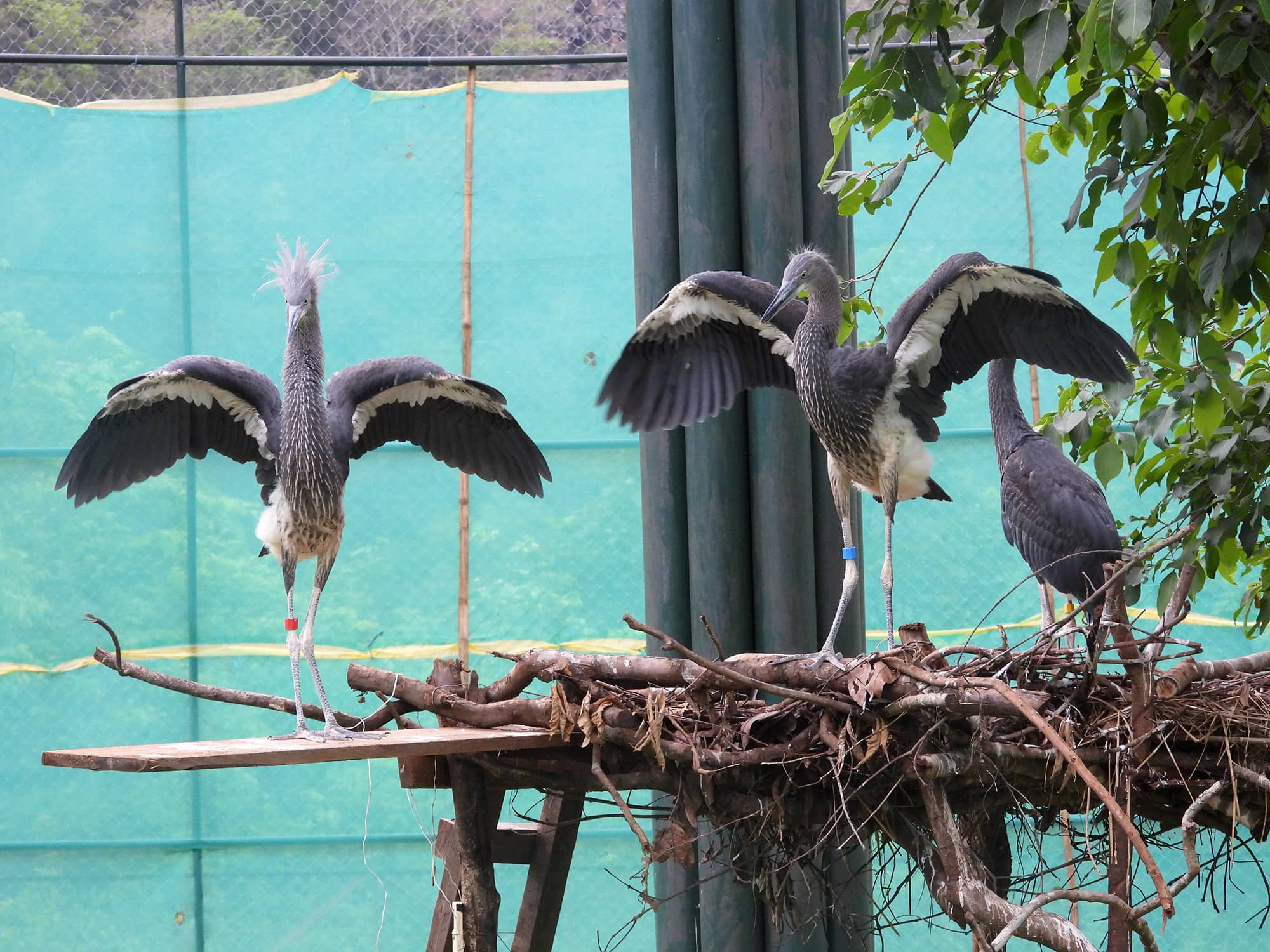
The descent towards Punakha brings warmer broadleaf forest and river habitats. Birding around Lamperi Botanical Park can produce species such as Wards Trogon, Brown Parrotbill, Streak-breasted Scimitar Babbler, Hoary-throated Barwing and Hodgson’s Redstart. On arrival, along the Pho Chhu and Mo Chhu rivers, the focus shifts to river specialists, with possibilities including White-bellied Heron, River Lapwing, Crested Kingfisher, Pallas’s Fish Eagle, Plumbeous Water Redstart and White-capped Redstart. Overnight: Punakha
Day 3: Punakha to Trongsa | Central Forest Birding En Route
The journey towards Trongsa passes through a changing sequence of warm broadleaf forest, bamboo, scrubland, farmland and higher-elevation woodland. Enroute, stop at productive forest sections and roadside habitats for spotting. The forests around the Nobding and Pele La approaches can be particularly productive for Himalayan forest birds. Possible species include Himalayan Cutia, Blyth’s Shrike-Babbler, Grey-bellied Tesia, Black-faced Warbler, Mrs. Gould’s Sunbird, Fire-capped Tit, Black-browed Tit, Bhutan Laughingthrush, Speckled Woodpigeon and Golden-breasted Fulvetta. The area also offers opportunities for Ward’s Trogon, while roadside cliffs and large bee colonies may attract Yellow-rumped Honeyguide. As the road climbs and descends through different elevations, the changing vegetation provides a valuable succession of bird habitats before reaching Trongsa. Overnight: Trongsa
Day 4: Trongsa to Tingtibi | Kuenga Rabten, Koshala & Subtropical Forests
Leaving Trongsa, the route descends steadily into the warmer forests of Zhemgang and Tingtibi. Birding begins around the Kuenga Rabten–Koshala–Wangduegang section, where the transition from temperate to subtropical forest creates opportunities for species not encountered at higher elevations. As the road approaches Tingtibi, the focus shifts towards broadleaf forest, bamboo and river valleys. Possible targets include Red-headed Trogon, Rufous-necked Hornbill, Bay Woodpecker, Blue-bearded Bee-eater, White-browed Piculet, Chestnut-breasted Partridge, Pin-tailed Green Pigeon, Lesser Shortwing, White-tailed Robin, Grey-headed Parrotbill, Rufous-faced Warbler, Pygmy Blue Flycatcher, Sultan Tit and several scimitar-babblers. Tingtibi is recognised as an important birding area because of this exceptional change in habitat and elevation. Overnight: Tingtibi
Day 5: Full-Day Tingtibi & Zhemgang Birding | Subtropical Forest Specialists
The entire day is devoted to the rich forests around Tingtibi and Zhemgang, one of the principal birding sections of the expedition. The focus is on mixed broadleaf forest, bamboo stands, forest edges and river corridors. The main targets include Red-headed Trogon, Rufous-necked Hornbill, Beautiful Nuthatch, Blue-bearded Bee-eater, Bay Woodpecker, White-browed Piculet, Pin-tailed Green Pigeon, Chestnut-breasted Partridge, Grey-headed Parrotbill, Black-faced Laughingthrush, Lesser Shortwing and Pygmy Blue Flycatcher. Several species of babblers, yuhinas, fulvettas, cuckoos and other forest birds add considerable diversity to the day. White-bellied Heron is another important possibility around suitable riverine habitat. This is one of the expedition’s key opportunities to experience Bhutan’s subtropical avifauna before continuing further south towards Panbang. Overnight: Tingtibi
Day 6: Tingtibi to Panbang | Tingtibi–Gomphu–Panbang Forest Corridor
The journey from Tingtibi to Panbang is an extended birding transect through subtropical forest rather than just a transfer. The Tingtibi–Gomphu–Panbang corridor contains dense forest, streams, river valleys and mixed habitats that support a different community of low-elevation birds. We give particular attention to hornbills, broadbills, kingfishers, barbets, babblers and forktails. Possible sightings include Rufous-necked Hornbill, Long-tailed Broadbill, Grey-lored Broadbill, Ruddy Kingfisher, Black-backed Forktail, Rufous-backed Sibia, Blue-eared Barbet, White-hooded Babbler, Pale-billed Parrotbill and Large Scimitar Babbler. The forest also has records of the elusive Green Cochoa, while the distinctive calls of Grey Peacock-Pheasant may be encountered. Arrival in Panbang allows further afternoon birding along suitable forest and river habitats. Overnight: Panbang
Day 7: Full-Day Panbang & Royal Manas Birding | Lowland Forest Specialties
Panbang receives a full dedicated birding day because of its exceptionally rich subtropical and lowland forest habitats. The principal focus is the Panbang–Nganglam road and surrounding forest, where multiple habitat types produce a high diversity of species. The area is particularly important for hornbills, with opportunities to encounter several of Bhutan’s hornbill species. Other targets include Long-tailed Broadbill, Grey-lored Broadbill, Rufous-backed Sibia, Ruddy Kingfisher, Blue-eared Barbet, Black-backed Forktail, White-hooded Babbler, Pale-billed Parrotbill and Large Scimitar Babbler. The secretive Green Cochoa and Grey Peacock-Pheasant are among the more difficult possibilities, while Red-headed Trogon and Rufous-necked Hornbill remain important targets in the wider Panbang forests. Riverbanks and quiet streams also provide opportunities for White-bellied Heron, making Panbang one of the most diverse low-elevation birding environments on the itinerary. Overnight: Panbang
Day 8: Panbang to Bumthang | En-Route Forest & Yotong La Birding
The long journey northwards provides another opportunity to bird across changing elevations rather than treating the day solely as transportation. As the route moves from Panbang through Tingtibi and Trongsa and climbs towards Bumthang, the bird community changes from subtropical species to temperate and high-elevation Himalayan birds. Where conditions allow, birding stops can be made through the Trongsa and Yotong La sections. The higher forests and bamboo habitats can support Great and Brown Parrotbills, Slender-billed Scimitar Babbler, Red-headed Bullfinch, Himalayan Monal, Black-rumped Magpie, Snow Pigeon, Red-billed Chough, Blue-fronted Redstart and White-throated Redstart. The changing elevation makes this one of the most interesting ecological transitions of the journey. Overnight: Bumthang
Day 9: Full-Day Bumthang Birding | Alpine Valleys & Mountain Forests
Bumthang provides a very different birding environment from the subtropical forests of southern-central Bhutan. The focus is on higher-elevation forests, bamboo, farmland, river valleys and mountain slopes. Potential targets include Himalayan Monal, Satyr Tragopan, Great Parrotbill, Brown Parrotbill, grosbeaks, Red-headed Bullfinch, Black-rumped Magpie, Snow Pigeon, Red-billed Chough and various redstarts and finches. The surrounding valleys and higher passes also provide opportunities for Goldcrest, Blyth’s Pipit and Common Sandpiper in suitable habitats. The combination of open valley habitat and higher forest makes Bumthang an important mid- to high-elevation component of the expedition. Overnight: Bumthang
Day 10: Bumthang to Yongkola | Ura, Selthang La & Thrumshingla Forests
This is another major en-route birding day. The journey from Bumthang towards Yongkola crosses several important elevation zones, including the Ura and the forests of Thrumshingla. The higher sections can produce Beautiful Rosefinch, Gold-naped Finch, redstarts, sunbirds and other high-elevation species, while the descent towards eastern Bhutan gradually introduces richer broadleaf forest. The changing habitats also provide opportunities for Himalayan Cutia, Ward’s Trogon, parrotbills, laughingthrushes and other forest specialists. By the time the route reaches Yongkola, the vegetation has changed dramatically, setting up the expedition’s most important eastern birding section. Overnight: Yongkola
Day 11: Full-Day Yongkola Birding | Thrumshingla & Limithang Forests
Yongkola receives a full dedicated day because of the extraordinary diversity of the surrounding eastern Himalayan forests. The focus extends through the Yongkola, Namling and Limithang forest corridors, where mixed broadleaf forest supports a remarkable collection of specialist birds. Our key targets include Beautiful Nuthatch, Rufous-necked Hornbill, Red-faced Liocichla, Golden-breasted Fulvetta, Black-throated Parrotbill, Rufous-necked Laughingthrush, Yellow-rumped Honeyguide, White-browed Bush Robin, Rufous-winged Fulvetta and Fire-tailed Myzornis. The area is also known for difficult forest species such as Hodgson’s Frogmouth, while mixed-species flocks can contain a wide variety of babblers, laughingthrushes, yuhinas, minivets and woodpeckers.Yongkola is one of the principal specialist birding highlights of your entire trip. Overnight: Yongkola
Day 12: Yongkola to Mongar to Kharungla | Eastern Himalayan Birding Transect
The morning begins with another opportunity to explore the Yongkola forest before continuing towards Mongar and Kharungla. The route provides a natural birding transect from the rich lower-elevation broadleaf forests towards higher mountain habitats. Around the Kori La and eastern mountain forests, possible targets include Fire-tailed Myzornis, Rufous-necked Laughingthrush, Yellow-rumped Honeyguide, White-browed Bush Robin and Rufous-winged Fulvetta, with further opportunities for Beautiful Nuthatch, Scarlet Minivet, wren-babblers and other forest specialists. As the elevation increases towards Kharungla, the species composition gradually changes towards high-elevation Himalayan birds. Overnight: Wamrong
Day 13: Full-Day Kharungla Birding | Tragopan Home
We will spend a full day exploring Kharungla. The forests here provide a different set of high-elevation targets from the warmer forests of Yongkola and Panbang. The principal possibilities include Himalayan Cutia, Ward’s Trogon, Satyr Tragopan, Blyth’s Tragopan, Timmick’s Tragopan, Bhutan Laughingthrush, Grey-sided Laughingthrush, Rufous-throated Wren-Babbler, Spot-winged Grosbeak, Shortwings, minivets and Rufous-necked Hornbill. Golden-throated Barbet, White-naped Yuhina and Chestnut-crowned Warbler are among other species associated with the area. The day is open for concentrated birding in the most productive forest habitats, giving the expedition time to search for the more elusive Himalayan specialties. Overnight: Kharungla/Wamrong
Day 14: Kharungla to Trashigang | Eastern Mountain Birding
The morning provides a final opportunity for birding around Kharungla before continuing towards Trashigang. The route remains within eastern Bhutan’s productive mountain environment, with opportunities to stop in forest patches and roadside habitats. Possible targets during the transition include Himalayan Cutia, laughingthrushes, yuhinas, minivets, wren-babblers and other eastern Himalayan forest birds. Overnight:Trashigang
Day 15: Yonphula to Paro by Domestic Flight
Take the domestic flight from Yonphula to Paro, avoiding another long overland journey across eastern and central Bhutan. On arrival, the remainder of the day is kept relaxed. Depending on flight timing, there may be a final opportunity for light birding around the Paro Valley and Pa Chhu, where riverine and agricultural habitats can again produce species such as Ibisbill, Brown Dipper, Wallcreeper and other valley birds. Paro has spotted the rare White-bellied Heron recently. This evening marks the transition from the specialist birding programme to the final cultural highlight of the journey. Overnight: Paro
Day 16: Tiger’s Nest Monastery| The Cultural Finale
The final day is reserved for the hike to Tiger’s Nest (Taktsang Monastery), dramatically situated above the Paro Valley. This day is intentionally kept separate from the specialist birding programme, providing a fitting cultural and landscape finale after travelling through Bhutan’s major bird habitats. Evening, visit a local homestay and enjoy a traditional Bhutanese farewell dinner with the local family. Overnight: Paro
Day 17: Departure Day
Morning, return to Paro and proceed to the airport for your onward departure, bringing your specialist Bhutan birding expedition to a memorable close.
Package Inclusions
- Airport transfers and standard transportation throughout the tour.
- Accommodation in comfortable 3-star hotels.
- All meals as specified in the itinerary.
- Bottled drinking water during sightseeing and transfers.
- An experienced English-speaking (birding specialist) guide throughout the journey.
- Bhutan visa and visa processing fees.
- Bhutan’s Sustainable Development Fee (SDF) and applicable government taxes.
- Sightseeing and entrance fees for monuments and attractions mentioned in the itinerary.
- Short hikes and packed lunches where required.
Package Exclusions
- International and domestic airfares.
- Accommodation upgrades to 4-star or 5-star hotels.
- Vehicle upgrades.
- Travel insurance.
- Beverages and bottled water consumed at hotels or outside the included meals.
- Tips and gratuities for guides, drivers and other service providers. These are entirely at the guest’s discretion and may be given based on the quality of service received.
- Personal expenses and any services not specifically mentioned under Package Inclusions.
- Bank/wire transfer fees and credit card transaction or processing fees.
- Anything that not mentioned in the inclusions
Cancellation Policy
To confirm your Bhutan tour booking with Rustic Frontiers, a minimum of 50% of the total tour cost must be paid upon confirmation and prior to your arrival in Bhutan.
In the event of cancellation, refunds will be processed after deducting the applicable cancellation charges outlined below. Bhutan Airlines, Drukair and luxury hotels may have separate reservation, cancellation and refund policies, which will apply in addition to the tour cancellation policy. Any bank or wire transfer charges associated with a refund will be deducted from the refundable amount.
Cancellation Charges
| Cancellation Notice | Cancellation Charges |
| More than 60 days before arrival | No cancellation fee on the land cost. Airline and hotel cancellation charges, where applicable, will be deducted according to their respective policies. |
| 45–60 days before arrival | 25% of the total tour cost will be deducted. |
| 30–44 days before arrival | 50% of the total tour cost will be deducted. |
| 14–29 days before arrival | 75% of the total tour cost will be deducted. |
| Within 7 days of arrival or No-Show | 100% of the total tour cost will be deducted. |
Important: All cancellation requests must be submitted to Rustic Frontiers in writing by email and are subject to confirmation and approval by Rustic Frontiers. The applicable cancellation period will be determined by the date the cancellation request is received and approved.
Airline tickets, luxury hotel reservations and other services with separate cancellation policies will be subject to the respective supplier’s terms and conditions.